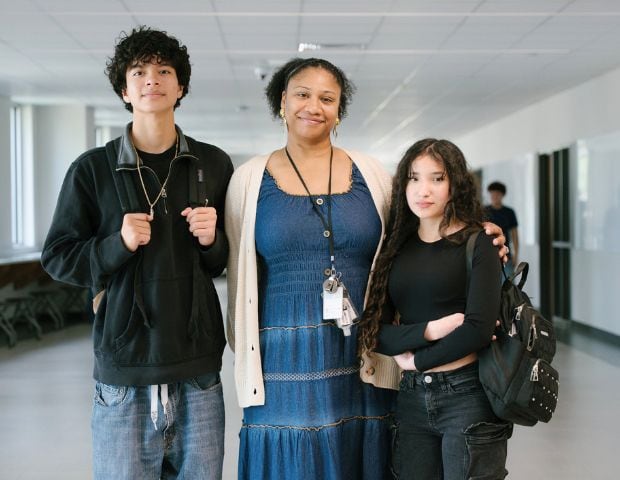
High schools should shift to a whole-school “Guidance Culture” with postsecondary planning in everyday lessons.
Empowering Students to Lead their Own Postsecondary Journey
Filling out the forms, fixing the FAFSA errors, and handing over the scholarship links feels like it is helping students, but it leaves them without the agency they need the moment no counselor is beside them. This post makes the case for shifting from transactional to transformational advising, using relational coaching and the “I Do, We Do, You Do” method to enable students to lead their own postsecondary journey.
Key Takeaways
- Doing the work for students backfires. Filling out their forms and fixing their errors feels like help, but it robs students of the problem-solving skills they’ll need once no counselor is beside them.
- Move from transactional to transformational advising. Instead of handing students the answer, coach them to find it themselves, even when deadlines make grabbing the keyboard tempting.
- Use “I Do, We Do, You Do” to build independence. Model the thinking first, practice together, then step back completely so the student owns the final decision.
- AI can be an autonomy engine. Teaching students to research careers, draft outreach emails, and compare aid letters with AI tools shifts students from passive recipients to active navigators.
In any high school, the counseling office is the heart of the school, especially for seniors. From postsecondary planning and social-emotional guidance to everything in between, students are constantly flowing in and out of the doors. Of course, there are moments in the year when the office is closed because counselors are in meetings, or simply need a moment to organize and get things together to be ready for the next day’s demands, commands, and advice. Being a counselor is not for the weak!
As a postsecondary mentor for over ten years, I know it is incredibly tempting to “helicopter counsel” when deadlines are near and postsecondary planning is calling. To guarantee that a student hits their benchmarks, we find ourselves filling out the forms ourselves. If a student needs a fee waiver, we print it. If they struggle with a FAFSA error, we grab the mouse and correct it for them. We convince ourselves that this deep level of hand-holding is an act of love. More importantly, we know that under-resourced students face barriers, so stepping in feels like doing the right thing. Although this approach sounds helpful, it’s actually a disservice to our young adults.

During this high-pressure timeline, we treat the postsecondary planning process as a checklist of administrative hurdles to clear. And, when we complete tasks for students just to “get the job done,” we inadvertently rob them of the opportunity to develop crucial problem-solving skills. The consequences of this transactional approach is obvious during the following summer because when students graduate with a postsecondary plan that they did not actively build, they fail to develop the resilience needed to navigate higher education independently.
When these young people start college or enter a trade, they no longer have a counselor sitting next to them to handle the friction, and they lack the self-efficacy to figure it out alone. This absence of ownership is why so many students fall victim to “Summer Melt” or drop out before completing their first year. The goal of postsecondary advising cannot simply be about getting a student into a postsecondary institution; it must be about guiding them to build the internal agency to persist and get through it.
Defining the Shift:
From Transactional to Transformational
Traditionally, our schools are structured around a transactional model that treats postsecondary planning like an assembly line of compliance checkboxes and rushed paperwork. When counselors get stuck doing mostly clerical work, burnout happens fast. To break this cycle, we have to look closely at how we define our advising style. It requires a fundamental shift from a Transactional Model to a Transformational Model:
- Transactional: “I found three scholarships for you; here is the link.”
- Transformational: “Based on your career goal, how would you search for funding that matches your background? Let’s look at the search criteria together.”
The psychological impact of this shift changes everything. We practice transformational advising when we are tired, overwhelmed, and stare at postsecondary deadlines. It is always faster and easier to just grab the keyboard and type out the answer ourselves rather than sitting back and watching a student struggle through a form. But we must push through our own exhaustion to teach students to become their own agent.
In the long run, this disciplined approach teaches students how to navigate the complex, unwritten rules of postsecondary and, in some cases, adulthood too. Because when we force students to run the scholarship searches, decipher the financial aid award letters, and draft their own outreach emails, we aren’t just helping them with an application, we are teaching them administrative literacy. They learn how to problem-solve through confusion, how to advocate for themselves, and how to face the frustration of trial and error. Students don’t need to be rescued; they need guidance and it will teach them to not collapse under the weight of postsecondary-level expectations in their everyday life.
Shifting from a compliance clerk to a cognitive coach requires a deliberate and programmatic framework. Here are a few strategies:
Relational Coaching – OneGoal
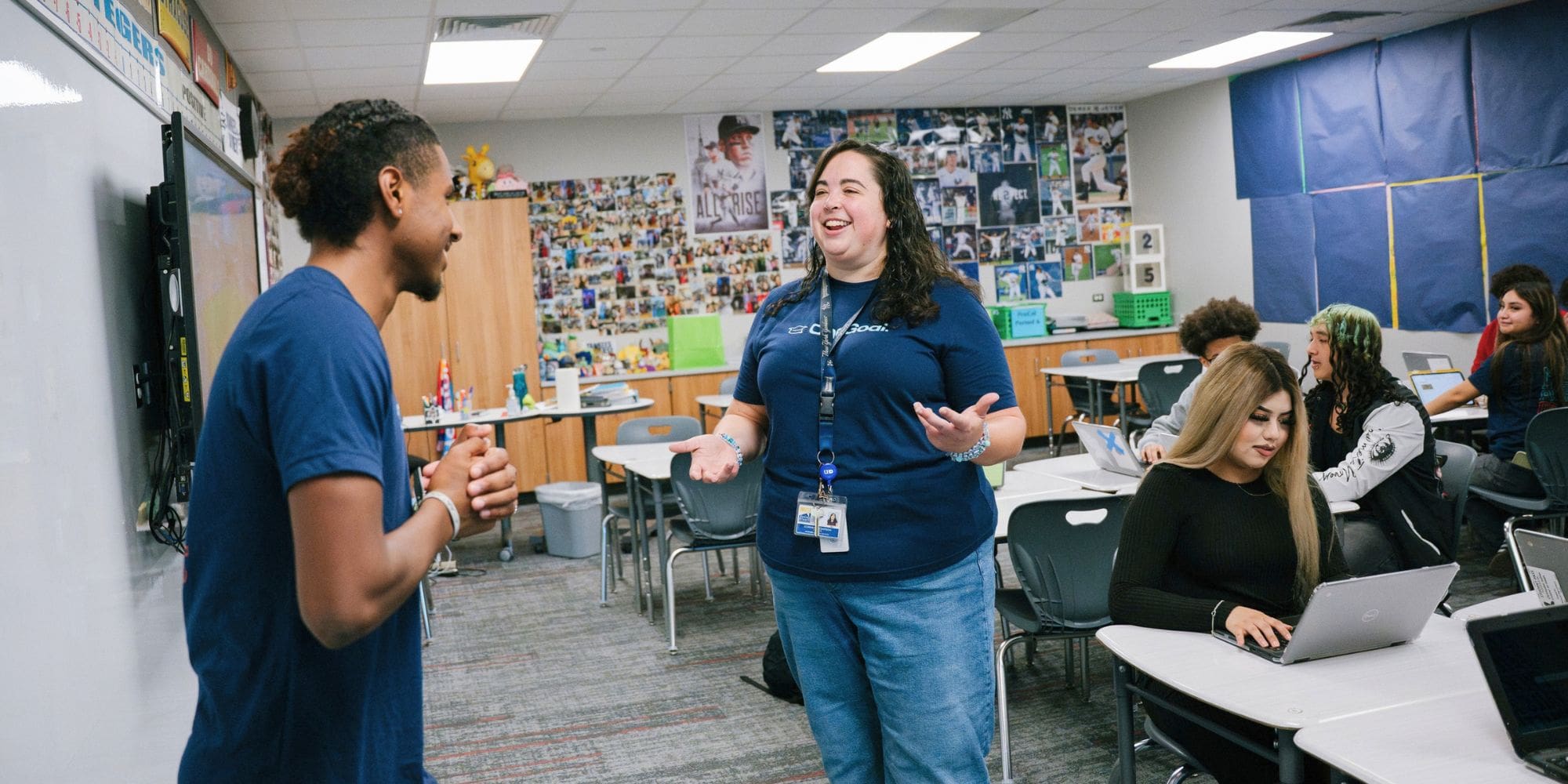
OneGoal redefines postsecondary counseling. It embeds a teacher-led advising directly into the high school school day and the entire curriculum is intentionally built around the Pillars of Fellow Success. The curriculum focuses on Social Agency and Self-Awareness and instead of dictating a student’s path, the teacher facilitates deep, reflective conversations that push students to investigate their personal values, analyze their own academic research, and reflect on their long-term postsecondary goals.
I’ve been a OneGoal teacher for over ten years, and if there’s one thing I’ve learned, it’s that postsecondary planning can feel incredibly isolating when a student is doing it alone. When we create a trusting environment, students feel safe to have deep discussions about their anxieties, financial realities, and ambitions. This culture is seen when students track their own application statuses and update their financial plans in real time. This type of agency and accountability shifts from the teacher’s grade book to the student’s own dashboard just by allowing students to figure it out with little guidance.
AI as a Tool for Self-Directed Discovery
If we want students to drive their own discovery, we have to meet them where they are and right now, that means teaching them how to use AI responsibly as a research tool. Instead of relying on an overwhelmed counselor to compile a list of options, students can use AI tools like ChatGPT or FutureFit to conduct personalized career and institutional research. This shifts the advisor’s role away from basic information gathering and toward high-level evaluation. When used responsibly and in alignment with school and district policies, educators can expose students to AI as a resourceful tool.
For example, instead of a counselor handing a student a list of networking questions, we can encourage the student to use AI to draft their own informational interview questions for professionals in their field. The student can input a specific job description or bio and prompt the AI to generate open-ended questions. AI-powered platforms like Packback encourage students to generate their own unique, inquiry-based questions, training them to ask the right questions when navigating future adult spaces.

Scaffolding Autonomy
Building a student agency means having patience and flexibility even when high pressure deadlines are approaching. It sounds difficult, but in the long run, it will benefit the student. Counselors can carefully structure this transition using the classic gradual release of responsibility framework—the “I Do, We Do, You Do” method of advising. Let’s look at how this applies to one of the most confusing and emotionally fraught milestones: analyzing and comparing financial aid award letters.
- Step 1: The “I Do” Phase (Counselor Models): The counselor projects a sample financial aid award letter onto a screen or sits with the student to review one together. The counselor models the thinking process out loud, demonstrating how to identify the total cost of attendance, separate free grant money from loans, and locate hidden fees while the student observes.
- Step 2: The “We Do” Phase (Collaborative Practice): The counselor and student work side-by-side to analyze the student’s actual award letters. They might utilize an AI tool to compare two different letters, inputting figures and breaking down line items together. The counselor asks guided questions, providing immediate feedback and correcting misconceptions in real time.
- Step 3: The “You Do” Phase (Independent Demonstration): The counselor steps back completely. The student evaluates their final choices independently, builds a financial plan, and presents their “Best Fit” choice to the counselor with a data-backed justification.
By the time the student reaches Step 3, students hold ownership over their decision and this is the type of agency we want our students to have when they are faced with a challenge and don’t have us by their side.
Building Agency That Lasts
Beyond Graduation
For first-generation students and young adults from under-resourced communities, internal agency is the ultimate hidden curriculum. If we don’t explicitly teach them how to lead their own journeys while they are still in our classrooms, we leave them vulnerable in a postsecondary education system that will absolutely not hold their hands. This is a difficult task for a counselor because there just isn’t enough time to meet the obligations of daily tasks and engage in meaningful conversations, all while guiding a student to become their own agent of their future.
True agency cannot be built in a single, rushed counseling workshop, nor can it be absorbed through a senior assembly. It requires sustained, systematic coaching. This is why the OneGoal model is so vital, because it provides the consistent framework and relational coaching necessary to turn classroom time into structured professional training. When we pass the keyboard back to our young adults and teach them to plan with purpose, we graduate independent learners who are fully equipped to bridge the gap between high school and long-term success.
FAQs
What is transformational advising?
Transformational advising coaches students to find their own answers instead of handing them solutions. Rather than giving a student a scholarship link, an advisor guides them to run the search themselves — building skills they’ll use long after graduation.
How can school counselors build student agency?
By coaching instead of completing tasks — letting students run their own scholarship searches, decipher aid letters, and draft their own emails. The gradual release method, “I Do, We Do, You Do,” gives them structure to take over one step at a time.
How can students use AI for college and career planning?
Students can use AI tools to research careers, compare postsecondary institutions, draft informational interview questions, and break down financial aid award letters. This shifts them from waiting on an overwhelmed counselor to leading their own research.
What is the “I Do, We Do, You Do” method in advising?
It’s a gradual release framework where the counselor models a task, practices it alongside the student, then steps back so the student does it alone. Applied to financial aid letters, it moves a student from watching to fully owning the decision.
Monica Selagea grew up in Chicago and attended Columbia College in Chicago and DePaul University. She is currently a high school teacher in Chicago and a Program Director for OneGoal. She also teaches at the City Colleges of Chicago.
Related Stories
The academic middle students represent the greatest opportunity for growth in postsecondary readiness and long-term persistence.
In this blog, we will explain the moving parts of financial award letters, while offering tips on how to better understand a financial award letter so students and their families can make more informed decisions about college financing.