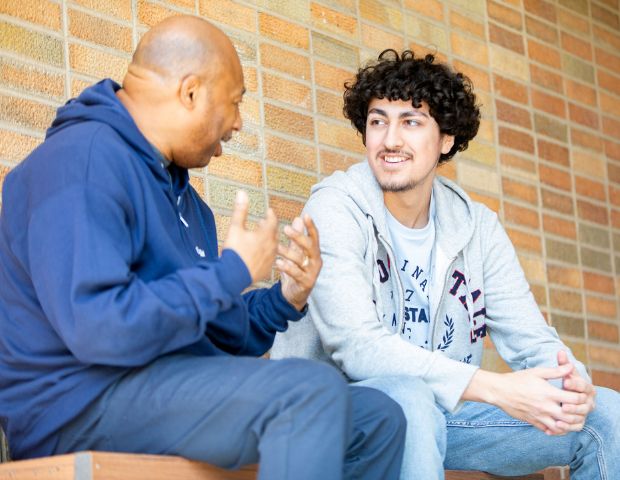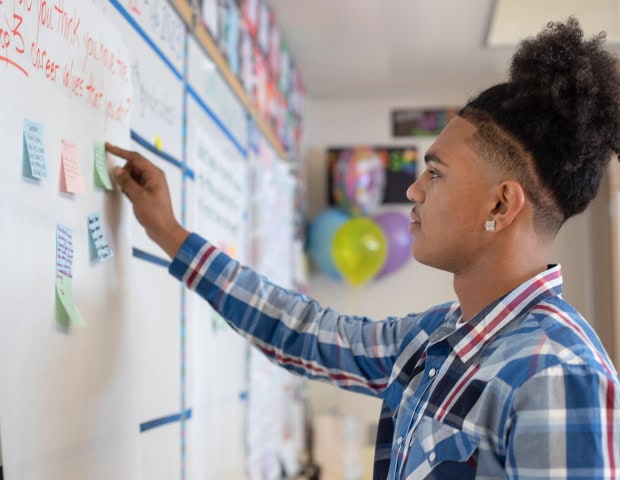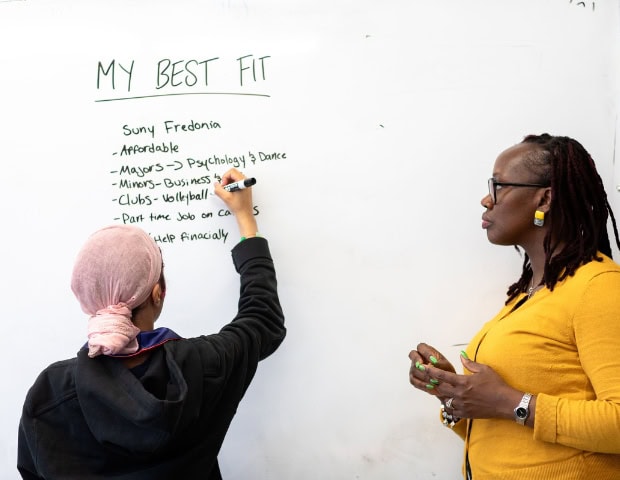
Explore factors for advising students on college choices and how our quality enrollment framework supports them in finding a postsecondary fit.
As educators, our primary goal is to prepare students academically to meet the objectives of their next grade. However, true success extends far beyond the classroom, and meaningful connections with students play an essential role in achieving this. Building these relationships is vital not only for students’ overall growth, but also for their postsecondary success, whether they pursue college, a career, or other postsecondary path.
Teachers spend an average of 30+ hours a week with their students, providing ample opportunity to understand their needs, strengths, and aspirations. By leveraging this time, educators, school staff, and leaders can better equip students for life beyond high school. This process should begin as early as freshman year, setting a strong foundation for college and career readiness. This blog explores strategies on how to guide every student toward success, emphasizing the importance of holistic preparation.
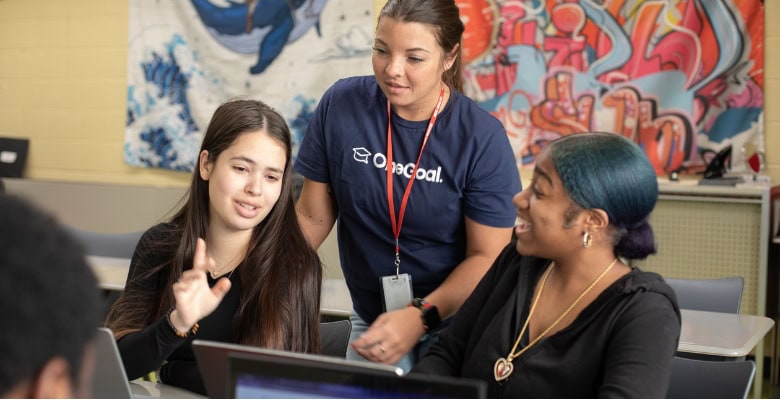
Preparing students for life after high school requires a collaborative effort—it truly takes a village. Whether students choose college, trade school, military service, or the workforce, school communities must prioritize equipping them with the academic, social, and practical skills needed to succeed in their chosen paths.
For students pursuing higher education, the goal is not just enrollment but persistence: successfully entering a program and staying committed to earning a degree or certification.
For those entering the workforce, the focus is on ensuring they possess the skills, knowledge, and confidence to transition seamlessly into a career where they can excel and thrive. This is where we come in!
As an educator for over 20 years, I’ve seen the challenges that many students face. From financial barriers to limited resources, these hardships can prevent a student from succeeding.
One of the biggest barriers is a lack of access to essential resources. Many students have limited opportunities to work with college counselors who could guide them through applications, scholarships, and career pathways. Without this support, they may not be exposed to the full range of options available, which can limit their choices and confidence in taking the next step. This is why it is extremely important to start at an earlier grade.
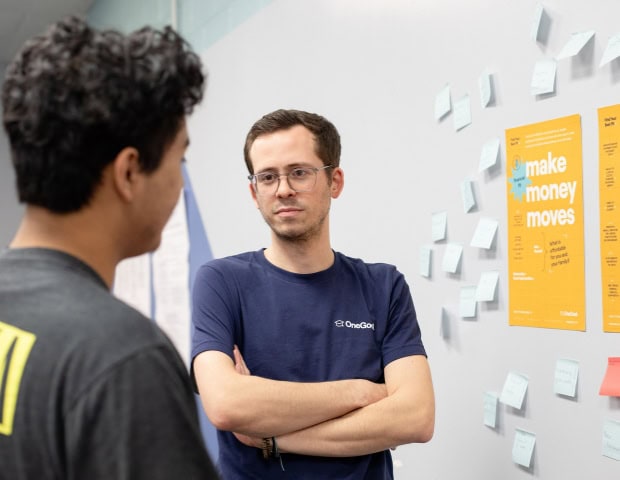
Scholarships not only ease the financial burden of college, but also play an important role in student persistence and success. Research shows that students who receive scholarships are more likely to stay enrolled and complete their degrees, as financial stress is a leading factor in college dropout rates. When students don’t have to worry about finances, they can focus more on their college experience and academics.
Typically, these suggestions would come from the counseling department, but with the overwhelming number of students assigned to each counselor, it can be daunting and exhausting for a counselor. This is why it should be a collaborative effort. Students should be able to count on the support and guidance of all the staff, teachers, and counselors.
Postsecondary programs like OneGoal play a crucial role in helping school districts support all students throughout their high school journey and ensure access to postsecondary opportunities. The OneGoal program is a comprehensive three-year initiative that begins in high school and extends support into the first year of postsecondary education. By partnering with districts and high schools, OneGoal ensures that postsecondary planning, preparation, and support are not treated as optional extracurricular activities, but as integral components of the high school experience for every student.
As a program director for OneGoal for the past ten years, I’ve witnessed firsthand the growth, determination, and success of students who have benefited from this program. With the guidance and resources provided by OneGoal, along with specialized training to become an effective postsecondary advisor, I am deeply committed to sharing this knowledge and support with all of my students.
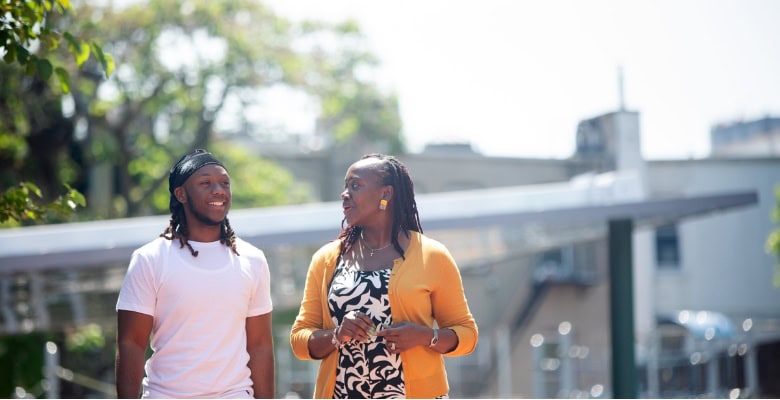
Finances are a major hurdle for many students, especially those who live in low-income areas. Typically, schools in these neighborhoods lack sufficient financial resources to assist all deserving students. This is why it is important to involve all staff in helping navigate these hurdles whether a student chooses the career path or college.
All students deserve the opportunity to choose their postsecondary path regardless of income, culture, and status. Unfortunately, first-generation students face more roadblocks than other students whose parents have attended college. Our First-Generation College Students – Unique Barriers blog post lists common barriers for these students. Understanding these disadvantages can help with the type of guidance and support a school community can offer. As a school, we need to be transparent about the cost of college as well as the cost of living expenses should a student decide to jump into the workforce after high school.

FAFSA recently launched a new financial aid process. The goal was to limit the amount of questions and simplify the process. However, since the launch, it has only caused challenges such as technical errors and longer wait times for submissions and financial award letters. Students whose parents do not have a social security number were especially challenged, which we refer to in our 6 Main FAFSA Challenges blog post. This is why it is essential that school communities invest time in educating our students and families about this rigorous process.
By offering these resources, schools can help students and their families feel more confident to not only complete the FAFSA, but understand its challenges. This will increase students’ chances of receiving financial aid for college and feeling prepared to complete it every year they attend college.
In recent years, social and emotional learning (SEL) has been integrated in the classroom so teachers can support students’ mental well-being and, in turn, create a foundation for lifelong learners. SEL is especially crucial for the transition to college because it helps students develop the skills they need to navigate new challenges. This will be a new realm for students, so educators and counselors both play a key role in instilling this foundation.
School communities must understand that SEL goes beyond the classroom. By integrating SEL throughout a student’s high school career, schools can prepare students not just for academic success, but for thriving in college, career, and beyond.
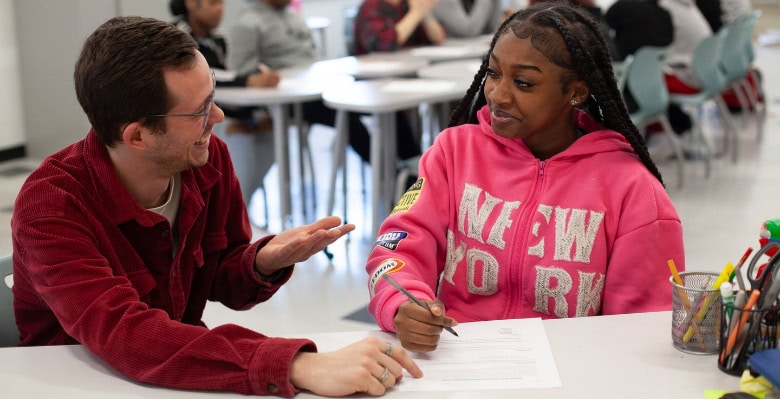
A strong postsecondary culture increases student motivation and confidence for life after high school. It helps them see a clear path to success, reduces anxiety about the future, and improves long-term career and financial stability. This culture goes beyond the classroom. As educators, counselors, school leaders, and community members, it is our responsibility to serve as dedicated guides, mentors, and advocates. Together, we can empower our students to achieve their full potential and confidently navigate their postsecondary journeys.
Starting early gives students the time to explore diverse career interests and academic paths without the pressure of immediate deadlines. By introducing college and career concepts in the ninth grade, schools help students build the foundational skills and financial literacy needed to make informed decisions long before graduation day.
Postsecondary readiness should be a collaborative, “all-hands-on-deck” effort. While counselors provide specialized expertise, teachers can integrate college and career exploration into their daily curriculum—such as practicing professional email etiquette or discussing financial literacy.
These students often navigate “hidden” barriers, such as a lack of familiarity with complex college terminology, limited access to professional networks, and significant financial hurdles. Beyond just tuition, the costs of applications and daily living can be prohibitive. Schools can bridge this gap by offering transparent financial guidance and fostering peer support groups.
Academic preparation gets a student into their next phase, but SEL skills help them persist. By focusing on self-advocacy, time management, and resilience, educators equip students to handle the independence of college or the workforce. Developing a growth mindset ensures that when students encounter the inevitable challenges of transition, they have the emotional tools to seek help and keep moving forward.
Monica Selagea grew up in Chicago and attended Columbia College in Chicago and DePaul University. She is currently a high school teacher in Chicago and a Program Director for OneGoal. She also teaches at the City Colleges of Chicago.
Explore factors for advising students on college choices and how our quality enrollment framework supports them in finding a postsecondary fit.
In this blog, we will explain the moving parts of financial award letters, while offering tips on how to better understand a financial award letter so students and their families can make more informed decisions about college financing.
Discover the five must-have college readiness skills every student needs to navigate the challenges of college life successfully. These skills help students transition smoothly from high school to college and thrive in their postsecondary journey.