



AI is quickly changing how students learn, plan, and explore their futures, offering new tools for career discovery, academic support, and accessibility. When students use AI tools with guidance from educators, these tools can deepen engagement rather than replace critical thinking.
Filter By |
How AI Can Support College and Career Guidance
By Monica Selagea
April 6, 2026
This blog explores how educators and school leaders can use AI for college and career readiness, offer ideas for how to get started without becoming overwhelmed, and raise important considerations about ethics and equity.
Table of Contents
- Introduction: The Evolving Role of AI in Education
- Framing AI: A Purpose-Driven Approach
- Strengthening Postsecondary Planning with AI
- Using AI to Support Student Writing
- Ethics and Equity: Navigating Challenges
- Implementation: How to Get Started Without Overwhelm
- Conclusion: AI as a Force Multiplier
- Frequently Asked Questions (FAQs)
Beyond Graduation
In today’s high schools, preparing students for life after graduation means more than helping them get into college. We must also prepare them for a fast changing, unpredictable workforce. This means helping students develop adaptability, build confidence, and discover pathways that align with their strengths, interests, and long-term goals. As the pressure to meet these evolving demands grows, many educators, including myself, are turning to artificial intelligence (AI) as a way to expand support, personalize guidance, and better prepare students for what comes next.
AI is becoming an integral part of the modern classroom. It should be seen as a powerful resource that can enhance teaching and expand student support. When embraced, AI has the potential to enhance how we prepare students for their next chapter. The key is to pair AI with the relationships and judgment that educators already bring to the table.
Key Takeaways
- AI can track milestones, identify at-risk students, and recommend personalized postsecondary options.
- Students can use AI to support their writing and for career exploration.
- School leaders must address privacy, bias, and access to ensure AI benefits all students.
- Teachers need training to use AI effectively and responsibly as part of student support systems.
- AI should support, not replace, the trusted relationships between the educator and the student.
Before You Start: Framing AI in Education
AI refers to systems that are designed to mimic human thinking by analyzing data, learning from patterns, and making predictions or generating content. AI is already being used in our everyday lives, such as voice assistants, recommendation engines, and auto suggestions in our texts or emails. In order to appreciate AI as a helpful tool, we must understand what AI means in a school setting. AI can serve many roles, such as monitoring key postsecondary milestones, like FAFSA submissions, college applications and acceptances, and even help counselors test early alert systems that flag students who are off track on college milestones, enabling more proactive support. AI tools can also help students to draft personal statements or help them explore job pathways.
But for AI to be useful and ethical in education, its implementation must begin with a purpose. Educators must ask: Why are we exploring AI in the first place? What specific problem are we trying to solve? For some schools, the goal may be to increase FAFSA completion rates. For others, it may be about giving students faster, more personalized feedback. With hundreds of students and only a handful of counselors per school, AI can be applied as a tool for support. For clarity, AI will not replace the educator or the advising. It’s not meant to take the place of the trusted adult who listens, guides, and knows each student’s story. Instead, AI should be embraced as a powerful resource that helps educators do more of what they do best. AI can extend the reach of counselors and teachers in ways that were once unimaginable. When used thoughtfully and ethically, AI becomes a force multiplier, allowing educators to focus more on relationship building and decision making while reducing the burden of tracking forms, deadlines, and data.
Using AI to Strengthen Postsecondary Planning
High school counselors juggle a wide range of responsibilities, from academic advising and social-emotional support to postsecondary planning and beyond. With so many competing demands, it can be difficult to give every student the individualized attention they need during critical decision making. When used intentionally, AI can enhance postsecondary support systems and help make the work more manageable for educators. Here are a few examples
- Track Key Milestones: AI platforms can monitor students’ progress on essential tasks, like FAFSA completion, GPA, attendance, college applications, transcript requests, deadlines, and test registration.
- These tools act as a “command center” for counselors, using data to ensure no student falls through the cracks.
- Overgrad: A 2026 standout for its transparency. It tracks college and career milestones (like FAFSA and applications) in a way that is easily visible to students, parents, and counselors.
- SchooLinks: Already popular in large districts like Chicago Public Schools, it provides real-time dashboards for transcript requests, financial aid status, and “at-risk” alerts for students missing deadlines.
- EduPolaris (Eddie): A specialized AI counseling assistant that provides a portal for students and parents to receive automated “nudges” and reminders about upcoming admissions tasks.
- These tools act as a “command center” for counselors, using data to ensure no student falls through the cracks.
- Use Data to Predict: Counselors will be able to use the data to predict at-risk students, postsecondary readiness goals, and gaps in readiness. This will allow counselors to tailor interventions.
- Identify At-Risk Students: Using the data, AI can identify students at risk of missing deadlines or falling off track, enabling early intervention.
- Streamline Communication: AI tools can send scheduled or real-time messages to students and families about key deadlines, such as FAFSA submissions, college applications, or scholarship opportunities.
- For schools with high student-to-counselor ratios, these tools handle the heavy lifting of outreach.
- EdSights: Uses a conversational AI bot that texts students to check on their well-being and academic progress, flagging specific students for counselor intervention when they express struggle.
- Ocelot (by Gravyty): A 24/7 AI engagement platform that answers common financial aid and application questions instantly, reducing the volume of repetitive emails counselors have to answer.
- For schools with high student-to-counselor ratios, these tools handle the heavy lifting of outreach.
- Centralize Student Data: AI can integrate data from multiple sources, such as grades, exams, applications, and more into one dashboard, which can help counselors quickly see where each student stands.
- Match Students with Postsecondary Options: AI can recommend colleges, programs, or career pathways that align with a student’s interests.
- Career exploration is also a crucial part of postsecondary readiness and many students may struggle connecting their interests to real-world opportunities. AI-powered tools can make this process easier by helping students discover careers that align with their passions. And it gives educators a practical way to guide the students!
- Personalized Career Matching: AI platforms can analyze students aptitudes, values, and personality traits to suggest career paths that align with who they are.
- These platforms use AI to move beyond basic surveys into interactive, data-driven discovery.
- COACH by CareerVillage.org: A non-profit, safe AI career assistant specifically for students. It helps them explore trade schools, military, and college paths through conversational guidance.
- Orchard: Uses an AI “buddy” named Orchie to help students find careers that align with their specific aptitudes and predicts which jobs are future-proof in an automated workforce.
- YouScience: Uses performance-based brain games and AI to match students with high-demand careers based on their natural talents rather than just interests.
- These platforms use AI to move beyond basic surveys into interactive, data-driven discovery.
- Interactive Career Exploration Tools: AI platforms like YouScience or VirtualJobShadow (with AI components) allow students to take assessments, explore virtual job tours and engage with multimedia content targeted to their profiles.
- Support for Counseling Conversation: Counselors can use AI-generated insights as a starting point for deeper conversations about future goals, helping students connect their learning to real-world connections.
- Writing college essays and personal statements can be a daunting part of the postsecondary process for both the student and the educator. With limited time and large caseloads, it can be a challenging task for counselors and educators to provide insightful feedback to every student. AI-powered writing tools can help bridge that gap by offering students starting points and structured support. This allows educators to focus their time on clarity and content rather than correcting mechanics. AI is a great tool for this, but educators should guide students to use AI for brainstorming while teaching the student to preserve their authentic voice and experiences.
- Finding Topics: Students can use AI for guidance to find topics that interest them, which can kickstart an outline.
- These tools focus on the “blank page” problem while helping students maintain their authentic voices.
- The Good AI: Designed specifically for academic integrity; it helps students brainstorm outlines and structure personal statements without writing the entire essay for them.
- Grammarly for Education: Moves beyond spellcheck to provide tone suggestions and authorship reports that help students prove their work is original and ethically supported by AI.
- Story2: Uses AI to help students find their “pivot moments” for college essays, focusing on storytelling and soft skills that AI cannot replicate.
- These tools focus on the “blank page” problem while helping students maintain their authentic voices.
- The Writing Process: AI can help students with a starting point by offering ideas, outlines, or first drafts.
- Immediate Feedback: AI can suggest improvements in grammar, structure, clarity, and tone.
- More than the Essay: Students can use AI to craft scholarship application essays, professional emails, or resumes and to prepare them for interviews.
- Integration Idea – College Writing Lab: Schools can host a college writing lab where students use AI to begin drafting and revising essays, supported by educators and counselors for feedback and peer review.
For more tools, read our blog post “6 AI Tools To Prepare Students for College and Career.”
Integration and Implementation: Getting Started Without Overwhelm
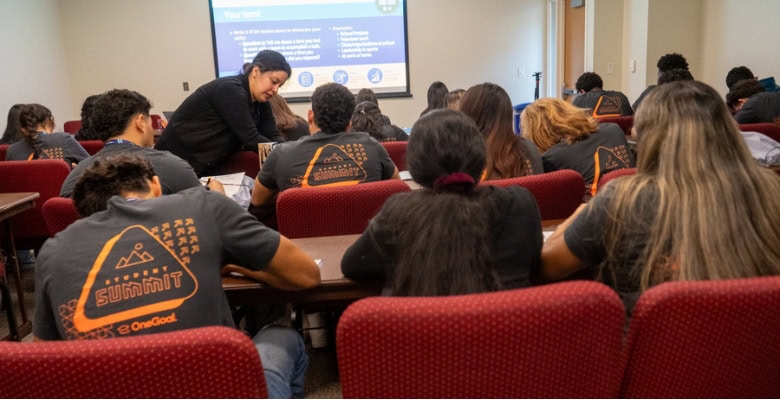
As school leaders begin to integrate AI into college and career readiness, it’s essential to approach this with a clear understanding of the ethical and equity related challenges. AI offers limitless opportunities, but it also comes with risks—especially when it’s used in a school setting. To use AI responsibly, schools must actively address issues around bias and privacy. AI is trained on certain data and that data can reflect historical biases or can exclude certain populations. Some of the AI recommendations can unintentionally reinforce inequities. Underserved students, such as students from low-income communities, students of color, English learners, and students with disabilities could be further marginalized rather than supported. We, as educators, must be conscious of this. Accessibility is also a priority; not all students have equal access to technology to use AI effectively, so schools must ensure that all students are supported in learning how to use AI-powered tools.
Data Guardrails: Prioritizing Student Privacy and FERPA Compliance
Privacy can also be an issue as AI gathers data to offer personalized insights. School leaders must be vigilant about how that data is collected, as well as stored and shared with others. Student privacy must be a priority and schools must only use vetted tools with transparent data policies that comply with federal protections such as the Family Education Rights and Privacy ACT (FERPA).
The Role of Professional Development
Schools should offer professional development that helps teachers and counselors understand the capabilities and limitations of AI. This requires thoughtful leadership because AI can serve as a force for good in postsecondary planning: it can help enhance opportunities for students and lessen the load for educators to focus on relationships with students.
Keep Educators in the Loop
OneGoal maintains strong, student centered relationships while using AI to enhance personalized support. Program Directors build trusted, multi year relationships with students, guiding them through their postsecondary journey. AI is used behind the scenes to flag students who may be falling behind on milestones, which allows the educators to intervene earlier and more effectively. OneGoal ensures technology strengthens relationships and expands opportunity while keeping human connection at the core.
Conclusion: AI as a Force Multiplier
As an educator for many years, I have had my doubts about AI. My hesitation came from a lack of understanding about what AI could actually do to support, rather than harm, the work we do with students. But as I explored its capabilities, I realized that AI isn’t something to fear. It’s not going away, so I chose to embrace it as a tool for my own work and as an opportunity to teach students how to use it responsibly. It’s not about shortcuts or turning in AI-generated essays; it’s about using technology to spark ideas, build confidence, and support learning in meaningful ways. AI can offer powerful support for educators, but it can’t replace the wisdom, empathy, and insight of a teacher or a counselor who truly knows their students. When used with intention, AI can help educators do more of what we do best, which is teach, inspire, and prepare young people for meaningful lives after high school.
Q&A
How much do AI tools cost?
Many AI tools have free versions or educator licenses. Start small before investing in full platforms.
Chicago Public Schools use School Links for grades 6-12. It provides personalized career interest inventories, college search tools, and financial planning resources. The platform also tracks key milestones like applications, transcripts, and FAFSA submissions, while generating dashboards and alerts to help counselors support students effectively.
What if students use AI to cheat?
Teach ethical use—frame AI as a support tool, not a shortcut. Use it to start conversations about digital literacy.
We don’t have enough devices. Can we still use AI?
Yes—use shared devices for guided activities (like resume writing sessions or college essay workshops).
How do I evaluate if an AI tool is safe and effective?
Look for transparency about data use, user reviews from other schools, and alignment with your educational goals. Always ensure that tools adhere to your district’s technology policies.
Monica Selagea grew up in Chicago and attended Columbia College in Chicago and DePaul University. She is currently a high school teacher in Chicago and a Program Director for OneGoal. She also teaches at the City Colleges of Chicago.

Related Stories
In this blog, we will explain the moving parts of financial award letters, while offering tips on how to better understand a financial award letter so students and their families can make more informed decisions about college financing.
Discover the five must-have college readiness skills every student needs to navigate the challenges of college life successfully. These skills help students transition smoothly from high school to college and thrive in their postsecondary journey.