
Sifting through postsecondary options can be overwhelming for students. The new Quality Enrollment Framework at OneGoal supports students in narrowing these options into a shortened “best fit” list.
How to Build a CCR Culture in Your District
By Monica Selagea
October 27, 2025
In many high schools, the goal is college. From college fairs to campus visits, students are often guided down a one-size-fits-all path that centers on a four-year degree as the primary route to success. But the truth is college isn’t for everyone. As a teacher for over 15 years, it’s difficult for me to admit that. But times have changed. Today, students have diverse strengths, interests, and needs. Some students may face financial barriers that make college less accessible, while others may be less academic and more hands on, and can thrive in environments like apprenticeships or trades. That’s why schools must shift their culture to reflect the reality that postsecondary success can take many forms and all of them are valid. College is still incredibly important for many careers, but it shouldn’t be the only option presented.
This blog post will explore how school districts can build a strong postsecondary culture that reflects the full range of opportunities available to students, how to start, and what to measure to track progress.
Key Takeaways
- A strong postsecondary culture needs a clear district-wide vision, not just isolated school programs.
- Start by aligning school leaders and auditing current practices.
Use consistent, equity-centered metrics to guide action and accountability. - Focus on what the district can influence: advising, supports, access, and expectations.
- Sustaining this work means embedding it into systems, goals, and leadership development.
What Is a “Postsecondary Culture”
and Why Does It Matter?
A postsecondary culture goes beyond the traditional idea of “college going culture.” It reflects a broader, more inclusive mindset that prepares and encourages all students to pursue a meaningful path after high school. Postsecondary pathways include:
- Four-year colleges and universities
- Community colleges
- Career and technical educational programs
- Trade schools
- Apprenticeships
- Military service
- Industry-recognized certification programs
- Direct entry into the workforce
- Entrepreneurship
A strong postsecondary culture influences how students see their own futures. It affects staff behavior, curriculum design, advising systems, and how families engage with schools. For students, the message they receive about what’s successful can heavily influence their sense of what is possible. If a school culture celebrates only four year college acceptance, students may feel pressured to follow that path, even if another path benefits them the most. However, when a school embraces multiple pathways and highlights success stories from diverse careers, students feel empowered to explore options that align with their passions.
Educators who work in environments that value all postsecondary outcomes are more likely to provide balanced advising and should share resources that steer students toward specific paths.
Family engagement is shaped by cultural norms and school culture, so they are more likely to support the nontraditional plans if they see them affirmed by the school.
Chicago Public Schools (CPS) requires all high school seniors to complete Learn.Plan.Succeed (LPS) as a graduation requirement, reinforcing the district’s commitment to postsecondary readiness for every student. Under LPS, students must provide documented evidence of a concrete post high school plan, which can include a college acceptance letter, a job offer or pay stub, proof of military enlistment, an apprenticeship opportunity, or a structured gap year plan. The initiative ensures that graduation isn’t just an endpoint, but a launchpad into a purposeful future.
By embracing and promoting all these options, schools can create a culture of opportunity that empowers every student to find the path that best fits the student and their family.
Where to Start –
Districtwide Levers That Drive Change
Set a Clear, Equity-Centered Vision:
Building a strong postsecondary culture requires intentional, system-level work that begins with a clear, equity-centered vision. The first step for any district is to define what postsecondary success truly means. Success should not be narrow, framed around four year college enrollment. It leaves out the students who may be pursuing trades, certifications, or direct employment. District leaders must explicitly state that all pathways are valuable.
In practice:
For CPS, this vision took shape through the launch of Learn.Plan.Succeed. It became a graduation requirement starting with the Class of 2020. CPS recognized that success should not be narrowly defined by four-year college enrollment alone. All students deserve the opportunity and support to build a plan that fits their unique goals, skills, and circumstances.
Use Data to Identify Gaps in Access and Outcomes:
It’s critical to use data to uncover gaps in access and outcomes. This data should guide priorities and funding, ensuring that postsecondary resources are distributed equitably, not just equally.
Then, disaggregate your data:
- Are students of color enrolling in college at the same rates as their peers?
- Are English Learners participating in dual enrollment or CTE courses?
- Are rural or students from low-income communities getting consistent advising?
In practice:
For Chicago, the LPS is supported by district-wide progress reports, academic tracking, and comprehensive advising.
Align School Leaders Around Shared Goals:
Once a shared vision is in place, the next step is aligning leaders around common goals. Principals play a central role in shaping school culture and setting expectations for staff. That’s why districts must invest in leadership development that centers postsecondary readiness.
In practice: To ensure equity and follow-through, CPS assigns a postsecondary leader to each high school to support staff and counselors in fulfilling LPS requirements.
Audit Current Readiness Practices:
Another essential move is to audit current readiness practices across schools. A system-wide review can reveal where gaps exist and where additional support is needed. This audit should include input from those doing the work every day, such as counselors, college and career coordinators, pathway teachers, and a postsecondary leadership team. Their insights are critical for understanding both barriers and potential solutions.
In practice:
Chicago schools have a Postsecondary Leadership Team to create, lead, and sustain a schoolwide culture that ensures every student graduates with a clear, actionable, and supported plan for life after high school. The team consists of school counselors, International Baccalaureate (IB) coordinators, CTE coordinators, and OneGoal Program Directors. This helps transform postsecondary planning from a counselor-only task into a shared schoolwide responsibility, rooted in student-centered support.
Start With Cross-School Collaboration:
Districts can build momentum by launching shared efforts across schools. Or start at the school level by hosting FAFSA nights, creating common career explorations or workshops for families.
In practice:
For CPS, the initiative begins early. Students in 6th through 12th grade complete an individualized Learning Plan (ILP) in SchooLinks, featuring quarterly activities like career exploration sessions, college and trade school fairs, panel discussions, and classroom visits. These experiences build a strong foundation of awareness and information, guiding students toward identifying their postsecondary pathway.
OneGoal creates equitable system-level change and grows student access to strong college and career planning resources through the OneGoal Leadership Network.
This case study shows the results of a partnership with Elgin U-46. In collaboration with OneGoal, the district identified focus areas and ensured a strong foundation for success across all areas.
“It’s nice to be in spaces with people who are all working for the same thing: postsecondary success for our students. Whether it be college and career, or whatever it is, it’s nice to hear what other schools and districts are doing. There are places where our district might be ahead and places where other schools are ahead of where we are, and that’s where we’re able to really learn from each other.” Michele Chapman, Director of Postsecondary Success, Elgin U-46, Chicago
What to Measure
(And How to Make It Actionable)
Districts must go beyond surface level metrics and start measuring what truly matters. While graduation rates are important, they don’t tell the full story of whether students are prepared for life after high school. By tracking meaningful indicators, districts can better understand student readiness and identify where support is needed.
Core Metrics That Matter:
Building a culture requires measuring progress, not just outcomes.
Schools can use:
- College and career pathways completion
- FAFSA completion rates
- Postsecondary enrollment, persistence, and completion
- Credential and apprenticeship participation
Disaggregate Data to Drive Equity:
Averages hide inequities. Use data to inform resource allocation, staff training, and targeted interventions.
Break the data down by:
- Race and ethnicity
- Income level
- English language status
- Diverse learners
- School area/neighborhood
Build the Right Data Habits:
Data shouldn’t live in spreadsheets; it should be visual, accessible, and routine.
Schools can:
- Create simple dashboards for school leaders
- Share monthly progress updates during staff meetings
- Celebrate classroom or homeroom wins (For example, FAFSA completion)
Track What You Influence:
Districts may not be able to control every aspect of a student’s future, but they can track the systems that influence strong outcomes.
Key indicators include:
- Access to college and career advising
- Enrollment in advanced classes or dual enrollment
- Enrollment in CTE courses
- Participation in job shadowing
Monitoring these areas helps ensure the schools are creating the right conditions for all students to succeed after graduation.

Keep It Moving –
Embedding the Work Long-Term
To sustain a strong postsecondary culture, the work must be embedded into the daily rhythms and long-term goals of the district. This means tying postsecondary outcomes into school improvement plans and principal evaluations, making them a shared priority across leadership. Just as important is celebrating progress regularly by recognizing student milestones, staff contributions, and family involvement. This builds momentum, reinforces a sense of purpose, and keeps the vision alive in every school community.
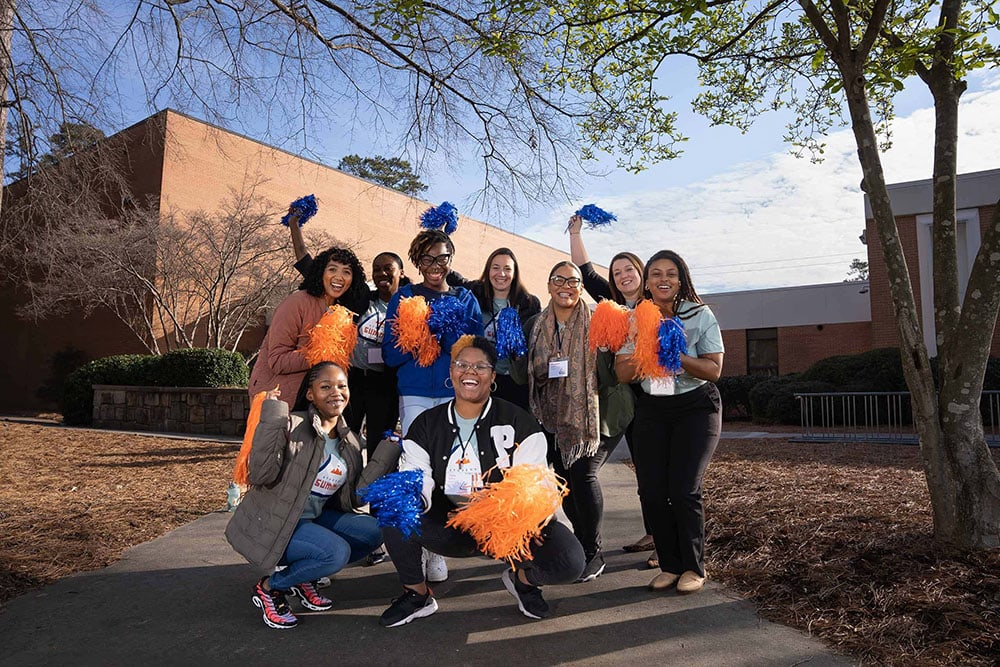
Building a Postsecondary Culture
Where Every Student Belongs
Building a postsecondary culture is not about replacing college with other options; it’s about expanding the definition of success so that all students, regardless of background or learning style, see a future where they belong. Districts like Chicago Public Schools have shown what’s possible when a clear vision, strong leadership, data-driven practices, and equity-centered systems come together. Learn.Plan.Succeed proves that students thrive when schools invest early, align teams, and follow through with accountability and care.
Whether students pursue college, a trade, or the military, they deserve guidance, celebration, and a plan that reflects who they are and where they want to go. By embedding postsecondary readiness into school culture, leadership goals, funding priorities, and everyday interactions, districts can create a system where every student has a future worth planning for.
Q&A
What if schools in my district are all over the place when it comes to postsecondary culture?
That’s normal. Focus first on building shared language and simple, common goals. Even getting all schools to track and reflect on the same 2–3 metrics can create momentum.
How do I get buy-in from principals who are already stretched thin?
Frame this work as student success—not one more initiative. Offer shared tools, highlight principal-led success stories, and connect it to outcomes they already focus on (like graduation and long-term student success).
How soon will I see results in building a school postsecondary culture?
You may see early gains in FAFSA or enrollment rates within a year, but deeper culture shifts, like improved persistence or credentialing, take longer. What matters is that you’re building the foundation now.
Monica Selagea grew up in Chicago and attended Columbia College in Chicago and DePaul University. She is currently a high school teacher in Chicago and a Program Director for OneGoal. She also teaches at the City Colleges of Chicago.
Related Stories
Explore strategies to help stopout students as they navigate returning to college. We examine the barriers to completion and hear students’ stories of persistence.
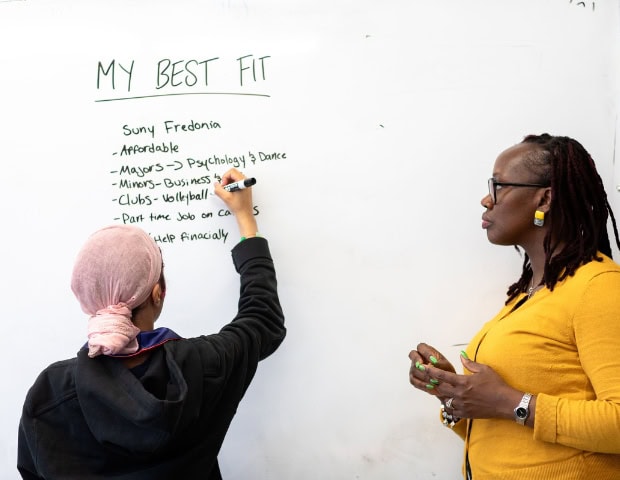
Explore factors for advising students on college choices and how our quality enrollment framework supports them in finding a postsecondary fit.